Can’t you see me here on overload?

I was told that I would like this song.  I ignored that, some DJ I had never heard of and one of the women in Destiny’s Child who was not Beyoncé?  Of course I was wrong and it is a beautiful track.  It is a pattern for me to push back against recommendations just because someone pushes it really hard.

John Bonney did not Just recommend Terry Pratchett to me he actually GAVE me The Colour of Magic.  At a time in my life (student on summer break) when I read a novel a day it took me 14 days to get through this 288 page novel.  I hated it – it was comedy, but not funny.

I know I was wrong and in a really big way.  I still don’t like Rincewind and the Luggage though.  It was reading Equal Rites and Mort (about witches and Death’s Apprentice) that changed my mind.  Small Gods is my favourite, which is almost a standalone book – plus I read it lying by a swimming pool in Crete which helps.  Now Terry Pratchett has sadly passed away I need to read them all again.  I do think some of the later ones, like Raising Steam, lack the brio of earlier books and move the Discworld too close to a real Earth level of technology.

(For those who do not know about it the books are set in Discworld, which is flat, carried through space on the back of the giant turtle A’tuin.  Almost every fantasy element ever imagined is represented).

I did not watch Our Friends In the North for years.  By the late 90s I was very aware that if something was praised to high heaven I would probably go into it with expectations too high and be disappointed.  I could not believe it would be up there with Brideshead Revisited, Edge of Darkness and I, Claudius.  I finally broke in 2005, mainly because Jonn Elledge kept saying how great it was and I felt left out when people on one of the mailing lists I was on kept talking about it. 

It is right up there with those other classics.  The sweep of post war British history is enlightening and enthralling.  I learned a lot watching it.  Christopher Ecclestone and Daniel Craig lead a very strong cast.

There is the other side.  Breaking Bad was sold as the next big thing after The Wire (and make no mistake The Wire is a stunning feat of television that requires and pays back concentration, with a cast of over 50 major speaking roles – it is not something to watch casually).  Breaking Bad is average TV to me.  Its fans rave about the fact that something hidden in one season is found in the next, compared to The Wire it is like comparing a Noddy book to Gravity’s Rainbow.  Its comparison to a great show hamstrung it for me, I’m sure it is ok – just not a classic.  A friend of mine had the same reaction when Desperate Housewives was launched saying it was the new Sex and the City – when it turned out to be nothing like it she did not watch.

The same applies to Mad Men.  I have never seen a program advance at a more glacial pace with so little story progression.  If the seven seasons were turned into seven two-hour episodes then it would have been far better. 

And just to finish slagging off AMC shows The Walking Dead has declined in quality as they have slowed it down because they are running out of source material.  They increased it to 16 episodes a year for the advertising revenue, but only want to pay the regulars for 13, which is why there are odd episodes with one or two cast members that do nothing for the story.  Read the original comic – it is not just better, but far more violent.

Sorry John.  You were right.

When Love Takes Over

Take me if you please

We had a head boy (plus a deputy) and a head girl (plus a deputy) in our sixth form.  These were chosen by staff, and as there were only 31 of us it was not a big pool.  I was not chosen, which was fine by me – it seemed like a problem with no benefits.  I was proved right when the local Rotary Club invited the Head Boy and Head Girl (which was pretty hypocritical of them as women were not allowed to join Rotary Clubs) to four meetings in the evening, with meals.

I was not laughing when the deputy head boy, Darrin Keeble, said that as he lived in Wivenhoe, a village about eight miles away, he could not possibly go to the meetings.  I was chosen to go in his place, so not only did I have to give up four evenings and dress in a suit, I did not even get to put that I was deputy head boy on university applications.

The evenings were what you would expect for a seventeen-year-old with loads of middle-aged businessmen.  At least I read a daily newspaper so could talk about current affairs, Michaela was grateful that I could talk about these subjects as she could not.  The food was not all that – Brightlingsea is not over endowed with restaurants.  They used Skillingers, which did English food and was ok, just about.

Fast forward nine years and one night in a pub we were chatting to some people we knew, or rather Dave was.  They were selling us on the idea of a junior Rotary Club called Rotoract, for under thirties, even better it was mixed male and female.  If nothing else, we figured that it gave us an excuse for midweek drinking at The Swan.  As it turned out Kirstie, the daughter of The Swan’s owner, was a member so it was usually a good night after a short meeting.

There were pub crawls to run and musical shows to promote.

A group of them dressed up as Gnomes and were paid to follow people around for comic relief.  Grant Thornton did not believe that was a good reason for a day off when I was assigned to do a review of our biggest client.

A group painted the bus shelter by the harbour – good for us as that was where we had our post night out takeaways.  I missed that too – work again.

(It is John Hawkins not Harkin)

By the end of 1992 most people had stopped going to Rotoract, but we agreed to run a jacket potato stall at the Brightlingsea Christmas Fayre.  I volunteered to cook chilli.  Some of the group were uncertain that would be popular and thought that cheese and beans would be better.  We spent all afternoon washing and baking potatoes in The Swan’s kitchen.  Now I can cook a good chilli and it turned out to be VERY popular on a cold night and we resorted to mixing most of the beans with the chilli to make it go further.  Most of the profit went on restorative drinks for the freezing workers.

Our last hurrah was a trip to Alton Towers, that left at 6am on a Saturday morning.  I was not keen on going and had a really good night out on the Friday, getting to bed very drunk after midnight.  I set my alarm for 6am – deciding that if the bus was still there when I got there I would go, otherwise I would not be bothered.  I woke up at 6am and felt dreadful.  I felt slightly guilty so showered and slowly walked to the pickup point.  I was not even the last person to arrive.  I was violently sick at the first service station.  Probably the best thing as I picked up a lot afterwards and managed most of the rides.

Dave met his lovely wife, Rose, at the meetings.  29 years later they are still going strong.  So major plus point there.

I was in full muso mode at this stage of my life and bought a Cream compilation to listen to some earlier Eric Clapton than I heard experienced already.  This song was written in the 1930s by bluesman Robert Johnson, who supposedly sold his soul to the Devil in exchange for his musical ability – at a crossroads.  Cream’s version is powerful – what else would you expect from Ginger Baker, Jack Bruce and Slow Hand?  Cream were succeeded by the supergroup Blind Faith – no track from them so I will just say that releasing an album with a topless 11-year-old girl on the cover is not something that would be allowed today.  It is still shown on the Wikipedia entry for that album – modern standards not being imposed on an old album – or continuing an old crime?  You decide.

Crossroads

I Don’t Want to Break These Chains

In 1993 John and Dave did not go on holiday.  Neil and I booked to go to Malia – even then a lively party town in Crete.  Not long before we left for the holiday Ken Berry asked if we minded him coming out.  I knew him a bit as he was part of extended group that included Neil’s brothers and their contemporaries.  Neil knew him better.  We had no objections, though he could not get a place in our hotel or on the same flights.

It was the first time I had been on a night flight – take off was close to 10pm.  It was about 5am when we got to the Hotel Efi.  Shops in the islands tend to stay open almost all hours but trying to get bottled water at 5am was impossible.  It was a bloody fine hotel though, set back about 100m from the main bar street it combined closeness with quietness.  As well as a Chinese takeaway right at the entrance to the hotel path, perfect for a late-night snack.

(Ken, Me and Neil at Spetters Bar, where they actually served draught Fosters, even though it was in XXXX glasses).

Now this was a holiday with a lot of drinking, though we did not just drink as the picture below of us at Knossos (home of the legendary labyrinth and the Minotaur) shows.  The journey there was not so legendary as I was so hungover I decided driving on the left was the right thing to do, despite everyone else wanting to be on the right (and in the UK I never. ever drove hungover).

(Ken, Neil and me at Knossos)

On Ken’s last night found I had won a football lottery – pick two teams for 100 drachma and the winner gets half the take.  I picked Liverpool and Ipswich and the latter won.  I won 20,000 drachma.  Much later on and much drunker I bet Neil that he could not be up early enough to get to Ken’s hotel and back before midday, as he was never up before that time.  He took that bet.

The next morning, I was chilling by the pool when Neil emerged at 11.30am.  He made it to the hotel and back (a mile each way) in time.  Neil was glad that he won the bet of 1,000 drachma (about £2 sterling). I thought it was worth the price as he had sweat pouring off him and I had won far more the night before on the lottery.

We had another six days before we went home and we had a good time. We would stagger in late with a Chinese takeaway and eat it on the balcony.  On our last night, waiting for the coach, a couple of women were telling us that they had had a great holiday, except for the drunken louts who woke them up around 5am.  Neil said that was odd as that was when we got in and we never had any problems.  Realisation dawned on them and him as I walked off, ostensibly to the loo, but really to try and stifle my laughter.

I never drank more in two weeks than I did in Malia.  This song was huge out there, despite being 4 years old.  It is tough not to include School’s Out, but this is better.

Poison

Compelled, but not defeated

Compelled, but not defeated

Do you know when it became illegal for the British Police to behave in a racist fashion?  Answer below.

This is the second track by a group recommended by my current boss (there was an earlier entry on The War on Drugs).

They are the best group you have probably not heard of that have a discography this big and are that good.  The Drive By Truckers.  They are from the Deep South of the USA and the title, and quote above, refer to the position of the Confederate Army at the end of the American Civil War.  It will be no surprise to you that the DBT are critical of that position and what it still means.

There is a view, passively encouraged by the media (and the USA being home to much of global media) that slavery was something that happened in the USA only.  In fact, the British were as bad with the use of slaves, but in the West Indies.  Conveniently, this was not in the UK, so the abuses and brutality were out of sight of the refined British.  Have no doubt that conditions on sugar plantation in the West Indies, were as bad, or worse, than those in the cotton plantations of Alabama.

Many of the richest families in the UK have fortunes based on the exploitation of free labour.  Their autobiographies all gloss over this stain on the source of their wealth.

Some people in Britain like to use the figleaf of being the first country to abolish slavery.  This is like saying that if a group of people beat you up for an hour and just because one person stops a minute before the others the victim is meant to be grateful to that one person.  I am still appalled that until recently we were still paying the debt taken out to compensate slave owners.  Not the ex-slaves, most of whom had no assets and had to continue to work for a pittance in terrible conditions for the same masters 

Another enduring defence is that the Europeans were buying slaves from Africans, so it was their fault.  Hopefully this quote will give anyone who thinks that a better understanding:

African-American Voices: A Documentary Reader, 1619-1877:

Apologists for the African slave trade long argued that European traders did not enslave anyone: they simply purchased Africans who had already been enslaved and who otherwise would have been put to death. Thus, apologists claimed, the slave trade actually saved lives. Such claims represent a gross distortion of the facts. Some independent slave merchants did in fact stage raids on unprotected African villages and kidnap and enslave Africans. Most professional slave traders, however, set up bases along the west African coast where they purchased slaves from Africans in exchange for firearms and other goods. Before the end of the seventeenth century, England, France, Denmark, Holland, and Portugal had all established slave trading posts on the west African coast.

Yet to simply say that Europeans purchased people who had already been enslaved seriously distorts historical reality. While there had been a slave trade within Africa prior to the arrival of Europeans, the massive European demand for slaves and the introduction of firearms radically transformed west and central African society. A growing number of Africans were enslaved for petty debts or minor criminal or religious offenses or following unprovoked raids on unprotected villages. An increasing number of religious wars broke out with the goal of capturing slaves. European weapons made it easier to capture slaves.

Slavery did end in the eighteenth century, which is a long time ago, but economic effects can persist, particularly if their remains prejudice and a lack of opportunity.  The unemployment rate for BAME people is twice as high as for white people (worst for black men).  Even that hides further inequalities as many BAME men and women work in low paid sectors, like security and garment manufacture.

Blind tests carried out on job applications and home renting showed applicants with the same details were offered interviews/ homes if they had a “white” sounding name, but not with one that implied black or Asian origin.  That is Britain today.

When was legislation enacted to make racist acts by the police illegal in the UK?  The year 2000.  There remains an issue with some racist police, but even a few is too many.  Statistics show that stop and search is used four times as often (adjusting for the make-up of the UK) on Black people than others and twice as often as people of Asian ethnicity.  The data also shows that when people are stopped for the same offences white people are let off and Black people are prosecuted. 

In the 1990s I knew a police officer who showed me a faxed list of racist jokes that had been circulated across the UK.  And these were vile jokes that are burnt into my memory and will not be repeated here. 

In my work in London, I have had to work with the police.  One sergeant I worked with for many years admitted that the Police remain infested with racists.  He referred explicitly to Tottenham, where it was known that racism was tolerated more than any other London force.  He had been in the Tottenham force during the Broadwater Farm riots in 1985.  Whilst he did not condone the riots, and definitely did not condone the murder of PC Blakelock, he said that the behaviour of the Police had provoked the violence and the riot was inevitable due to the casual beatings and abuse the Police carried out against the residents of the estate.

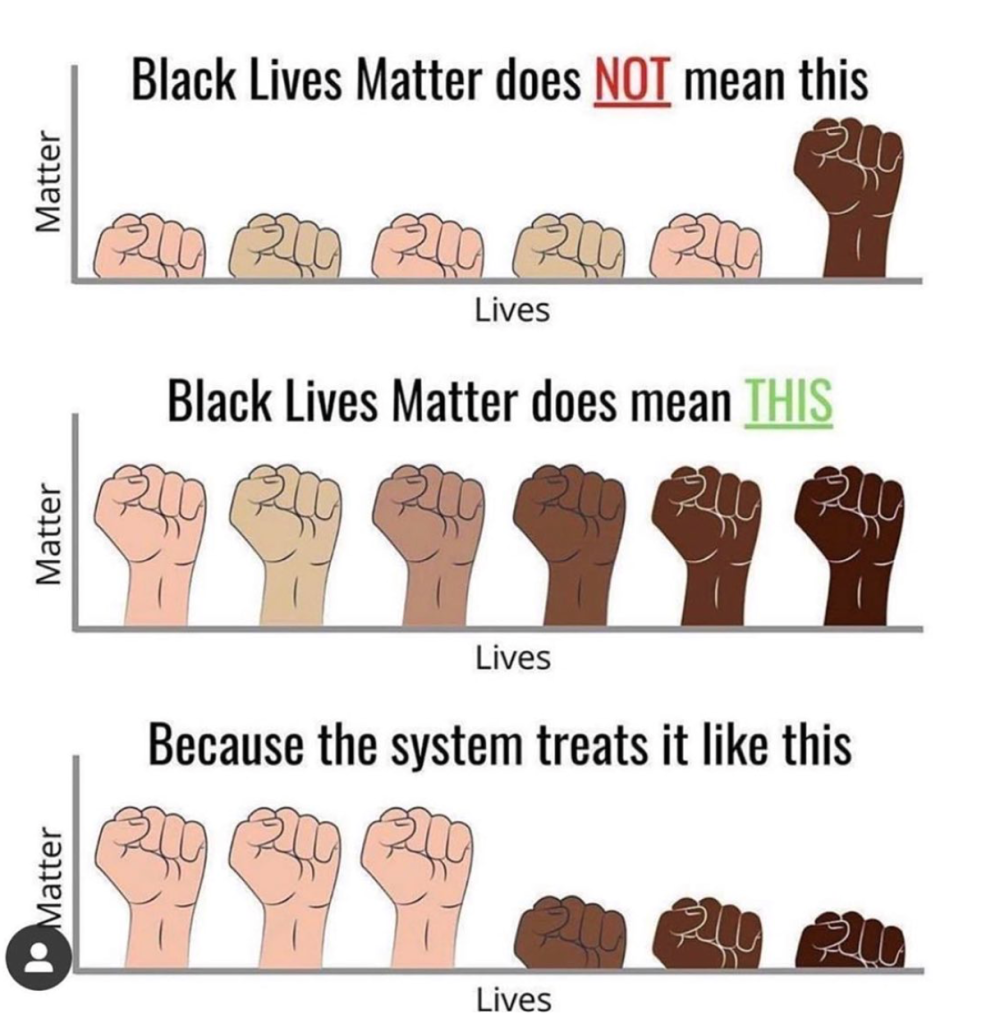
Then there are the people who say BLM is racist and All Lives Matter.  Of course all lives matter but this picture explains it. 

Maybe a better slogan would have been “Black Lives Matter Too, but The State Does Not Treat Us Like That” – not quite as catchy (the same way people blithely saying defund the BBC , for the most part, do not understand what defund the Police means –it does not mean taking money away for policing).  Saying all lives matter is a denial that there is inequality in face of the facts.

There is also racism fatigue, which is happening now.  On social media (well on FT316 which is usually a good place) you see people posting asking how long sports people will continue to make a point of taking the knee at the start of football or rugby matches.  Maybe the answer is when the situation improves?  BLM is not a fashion trend it is a movement against racism.

Then there are the statues.  Would society be happy with statues of Harold Shipman, Jimmy Saville or the Yorkshire Ripper being erected?  How about a statue of someone who murdered your relatives?  If not why is it ok to leave statues up of men whose philanthropy came from slavery profits?  It is all history.

The denial of the existence of racism in today’s society shows that the attitude of the confederacy continues everywhere to this day.  It is impossible to be agnostic on racism.  An agnostic position is condoning.

Surrender Under Protest

Television man is crazy saying we’re juvenile delinquent wrecks

In the 1970s children’s TV was cheap and that is before inflation kicked in during the second half of the decade and reduced budgets to pittances.

Those retrospective programs on TV shows (so popular on Saturday nights) use clips from things like Animal Magic, where Johnny Morris did fake voices over animals doing ordinary activities.  Or the relentlessly upbeat Blue Peter or even strange shows like Screen Test.  A show where opposing teams of school children answered questions about film clips – mostly made by the Children’s Film Foundation.  It was so odd as I had no idea where anyone ever saw these films.  As for Rainbow, I’m sure I’ve Bungle as an adult more as an adult than as a child.

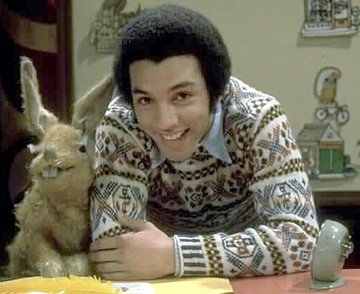
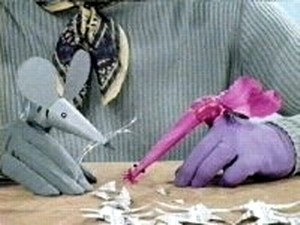
There was Pipkins – which featured a very camp Hartley Hare and a monkey called Topov.  Fingerbobs, a craft show, where the characters were on the fingers of the presenter.

(Pipkins)

(Fingerbobs)

There was Sky about a Time Traveller who came to Earth, but was rejected by the Earth’s immune system.  Like most of these shows the acting of the children is more wooden than an oak table, that is something has advanced as much as mobile phone technology since then.  Now even very young actors turn in excellent performances.

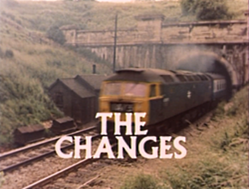
The Changes was a dystopian story about how humanity hates technology and regresses to an agrarian society.  The first episode as society breaks down was genuinely chilling and then there was an episode that had huge sections in Guajarati.  (Later in the decade the adult show The Survivors has society breaking down and regressing due to a flu pandemic – a bit close to the mark now).

The Children of the Stones was like a Dennis Wheatley horror story for children.  Standing stones, black magic and evil from space.  The most amazing thing was that lead adult character, played by Gareth Thomas years before Blake’s 7, is a physicist who totally accepts ley lines and astrology as facts without a query.

Yet none of these were the most bonkers.  That was The Tomorrow People.  Created as ITV’s Doctor Who, but on a budget a fraction of the size (and Doctor Who’s budget was not big enough anyway).  It does have a brilliant title sequence.  The real sequence starts with the opening fist – the first part was for the TV channel, there was a teaser and then the main sequence.

A lot can be forgiven as it featured various people of colour as regulars for most of its run, as well as a Traveller character.  The first story I saw had them trying to change back history after it had been altered so the Roman Empire never fell.  I only saw episodes 2 & 3 the first two times it was on – I could not see how they managed to reset time back to normal when I was young.  Of course it appealed to children – it was a show based on the fact that we were homo superior and would develop superpowers.

It could run to comedy with Peter Davison playing a man from a wild west society where women ruled.  Yet it could jump to a scary drama where the Tomorrow People are being hunted by British Intelligence, with several of them shot.  It ended with them winning but leaving Earth (of course they were back the following year).  On a rewatch it lost some of the tension as the evil General was played by Mr Lucas from Are You Being Served.

Children’s TV has a lot more money these days, but nothing as mad or quite as scary as this stuff.

This is the most self-congratulating hippie song ever.

All the Young Dudes

In a hanging garden, change the past

What is the most destabilising force in the Middle East?  Until the last few years it would be the behaviour of Israel towards the Palestinians.  Now I’m not so sure.

Islam has two major branches – Sunni and Shia (the split originates in a dispute over who should lead the religion after the death of the Prophet Mohammed).  Saudi Arabia is Sunni (the 90% majority branch) and Iran is Shia.  I am not suggesting that there antipathy is just about religion, a significant part of it is geopolitical – governments love to use religion to justify their actions.

It is a far cry from when Mohammed Bin-Salman (MBS) became Crown Prince of Saudi Arabia and was seen as a moderniser.  Saudi Arabia’s meteoric rise from the 1930s is mainly due to oil and obviously the Western Powers would not have allowed the Al-Saud family to rule the area if they had known how much oil was under the ground.  The Al Saud family had ruled parts of Arabia, in and off, since the 18th century, but it was the foundation of the modern Saudi Arabia.  In the 1970s, along with its OPEC partners, Saudi Arabia threw off the colonial shackles and started charging more for oil, triggering a recession and an energy crisis in the West.

The money from oil allows the country not to charge citizens tax and create many state funded non-jobs.  It has also allowed the sprawling Al-Saud family to live in unimaginable wealth.  The devil’s deal the Al-Saud family made was with the exponents of Wahhabism, a very strict form of Islam, which started in the first Saudi state.  Religious police patrol the kingdom, though this was only relevant to those without wealth or power.  The rich drew their blinds at prayer time safe in the knowledge that they would not be checked on by the religious police.  This has meant that Wahhabism has exported its influence due to funding from the Saudi government; Sunni Islam is not the same in each country, as Islam does not have a ruling structure like Christian churches.

Women and LGBTQ+ people had few, if any, rights.  Women famously not being allowed to drive, MBS came to power with an agenda to modernise the Kingdom.

This has involved the state sanctioned execution of Jamal Khashoggi at the Saudi embassy in Turkey.  The perpetrators have taken the blame and said that MBS was not involved, but they would wouldn’t they.  Khashoggi was a thorn in the side of the state and the best-case scenario is that there was a “Will no one rid me of this turbulent priest” scenario like that which caused the death of Thomas a’Becket, at least Henry II paid penance and was whipped by monks as punishment.  MBS used his geopolitical power to avoid condemnation from much of the world. Especially the USA.

The invasion of Yemen was to remove a perceived source of Iranian power adjacent to Saudi Arabia.  This has led to a protracted Vietnam style war with the Yemeni people devastated by armed conflict and disease.  Shamefully this has not stopped Western governments selling Saudi Arabia military equipment for those lovely petrodollars.  In the UK the government has breached its own rules about exporting military equipment to be used against civilians and continues to turn a blind eye to its own breaches of law.

MBS’s other aim was to diversify the kingdom’s income sources.  Even the huge amounts of oil below the Kingdom will run out eventually.  The House of Saud’s compact with their people will end without money, as will their lavish lifestyle.  A stake in the state oil company, Aramco, has been sold off. Definitely a case of Caveat Emptor – why would they sell, as the monopoly income is what funds the Kingdom and this will open up scrutiny?  Either because there is less oil than thought or outsiders who won shares will not want the Kingdom sanctioned or destabilised.

The new income stream comes from the House of Saud’s control of two out of there of Islam’s holiest cities, Mecca and Medina.  There is no historic reason for the House of Saud to be seen as particularly holy, though they use that to reinforce their rulership.  All Muslim’s, if they can, must perform Hajj and visit the holy cities at least once in their lifetime.

Mecca is being expensively redeveloped, with five, six and seven star hotels and has been dubbed Meccahattan.  It is spectacular and incredibly beautiful, but it is not some grand gesture of benevolence.  The income from the annual pilgrimage will be what funds the Kingdom in decades to come when the oil is gone.  A tax on the faith of the religion’s followers.

MBS is not the only problem, the House of Saud have repeatedly shown themselves to be venal, self-serving plutocrats, but MBS has taken this to a new level.

This song’s B side is Killing an Arab.  The drums on the A side it are pounding and it is much better than the Cure’s more famous material.

The Hanging Garden

Miss me madly and I’ll be yours

John Hawkins loves Altered Images.  Michael Ball loves Altered Images.  John Peel loved Altered Images.  He was on Top of the Pops saying that they would be the band of the 80s.  Well they weren’t.  I’m not even sure that there was a band of the eighties.  The Jam had a sequence of Top 5 hits (including four number ones and a number two) but really got them because their fans piled in and got the singles early on.  Culture Club were massive but imploded spectacularly when they did the Awful War Song, trying to copy Frankie Goes To Hollywood.  Duran Duran were big for longer and could have been massive, except they went on sabbatical (forming the Power Station and Arcadia), but they have no defining mega hit like Karma Chameleon.  Spandau Ballet had True, The Human League had Don’t You Want Me, but there was no really long lasting chart domination from any one group.

Altered Images had three albums, two of which got a silver disc – this hardly qualifies them as superstars.  They came out of a post punk ethos and actually had some very dark songs, like Dead Pop Stars (later renamed Disco Pop Stars so as not to be so scary).  Michael loves Clare Grogan, I mean really fancies her to this day (his wife knows, so if he starts having too many jobs in Haringey she will know why).

Now I am not saying Clare Grogan is unattractive, but it does highlight something about expectations of female appearance in popular music.  In the early eighties credibility came from looking like a music star – Chrissie Hynde, Toyah or the Belle Stars.  These were not women had to be impeccably gorgeous, make up perfect and dressed in skimpy clothing.  In the later eighties the manufactured pop stars placed more emphasis on looks – though that applied to male and female stars.

(Clare Grogan)

Then you get Baby One More Time by Britney Spears.  The Mickey Mouse club alumni dressed like a schoolgirl and launched a thousand fantasies.  Christina Aguilera took it a step further, actually stating that her aim was to look like a prostitute.   Combine this with the lad and ladette culture of the 90s and suddenly it is empowering for female stars to look perfect and dress in incredibly revealing clothes. Another manufactured star, Miley Cyrus, took it to even higher levels with videos in the nude (Wrecking Ball).  Whilst it may be empowering it is more worrying that it is money making and who is making it.

Britney Spears is still under conservatorship and cannot even buy chewing gum without permission.  This poor person, who earns £507,000 a night in Vegas is still being used to make money, despite having worked since the age of eleven full time (and before that part time, she was born in 1981).  Her breakdown years ago shows that she needs rest, love and support yet she is forced to go out on stage to earn money for other people.  On TikTok people tell her to wear a particular colour if she needs help – she always wears it.  I suppose she could be playing with her fans, but it has launched a movement.

You must always ask who is making the money – empowered women or music businessmen.

There are plenty of music stars with issues.  Kim Kardashian-West pleaded for understanding of her husband after his “Presidential Run”.  No one places them under conservatorship.  What about Pete Doherty?  A certain degree of eccentricity is admired in male stars that is not accepted in female stars.

The women (despite being a tiny minority) had less pressure in the 80s.  I am sure it is nice to be idolised (though stalkers are a danger) but at the cost of your sanity? 

#FreeBritney

Change of Heart

With summer at our ears

Once upon a time (and maybe again in the future now the pandemic is in effect) foreign locations were exotic.  In the 1970s and into the 1980s James Bond films were built around filming in foreign locations and beautiful women.  Filming series in the Greek islands in the 1970s  and 80s was the BBC’s idea of pushing the boat out on foreign travel.  Even when it is obvious that maybe a quarter of the show was filmed abroad and the rest is on a wobbly set at TV Centre it all seemed very different.

The king of the foreign show was Michael J Bird.  His first was The Lotus Eaters in 1972.  Set in Crete at a bar of ex-pats it tells their individual stories, the reference to the lotus is from Greek mythology, anyone who ate the lotus lost the will to go home.

The second series mutates into a spy thriller, still set in Aghios Nikolaos.  If you watch both series back to back the tonal shift is quite jarring.

(Me and Ken in Agious Nikolaos 1993).

Neil, Ken and I were in Crete in 1993 and I insisted we went to Agios Nikolaous, but it had definitely developed in 20 years.  I had not actually seen the show, repeats were uncommon and it was not until 2010 that I managed to see it.

(Crete is important in Greek myth -this cave was the birthplace of Zeus).

Bird followed this up with Who Pays the Ferryman?, again in Crete.  This was mainly set in Elounda (which I did not know in 1993 but luckily did visit).  This dealt with the ramifications of the events of World War 2 on a family.

After this Bird’s Greek series became more supernatural.  The Aphrodite Inheritance is set in Cyprus and features people who seem to be the modern versions of Greek Gods.  I have visited Cyprus, but when I did I had no knowledge of this story and I can’t find any location details even on IMDB.

The first one of his series I was allowed to watch was The Dark Side of the Sun, a supernatural thriller set in Rhodes with the Knights Templar at its heart.  The first episode is dynamite, but the location filming is concentrated to get the show off to a strong start.  Rhodes is beautiful and in 1995 Neil, John, Tammy and I visited Rhodes Old Town.

John, Dave and I revisited it in 2016 and, whilst it is a lot more commercialised, it remains beautiful.  Get away from the harbour and the day trippers from the cruisers and there are many great tavernas and old buildings.  The whole of the old town is pedestrianised – and mostly cobbled.

(John and Dave at the entrance to Rhodes Old Town).

In 2018 we visited several times – it is nicest to walk round at dusk when there are fewer tourists – get away from the shops and feel the history.  John, Dave and I decided to walk around what had once been the moat.  Halfway round we realised that it was all or nothing – there were no ways out of it part way round.  As typical British travellers we did this in the middle of the day, at least we had water with us.

(Dave and John walk the moat 2018).

Bird did one more show – Maelstrom.  Another supernatural thriller but set in Sweden.  It is okay but Sweden was less exotic and lacked the sun drenched Mediterranean background (not that Sweden is not beautiful, but it was a brand change)

Only season 1 of The Lotus Eaters is available to buy, but if you ever get the chance catch any of his work (bear in mind it has a slower pace than modern TV).

This beautiful track which is the perfect summer song.

The First Picture of You

I Want To Kiss Like Lovers Do

I know that gay rights were not invented in the 1980s, but that was when I first became aware of LGBTQ+ (not that it was called that then) people.  In the 1970s I had a vague understanding that Mr Humphries on Are You Being Served was effeminate and it seemed to hint that he liked men.  When I was 11 a maths teacher challenged Sean Kenny when he called someone a poof, but Sean did not say what it was, either because he was embarrassed or did not know.

The New Romantics dressed in a feminine style (and Spandau Ballet had kilts for about 5 minutes) as well as make up.  At school liking New Romantic bands was seen as dodgy.  When Culture Club were on Top of the Pops for the first time one member of our sixth form claimed that she was quite good looking (well he actually said that we would “do” her), a long argument followed about George’s gender, with the aforesaid person later embarrassed about what he had said.

Annie Lennox dressed in a very severe, masculine way, but did not get the attention that George did.  Her voice was praised and any other questions ignored, yet Boy George is a very good singer too (one of the few instances of a woman getting better treatment than a man, though the differences in treatment of lesbians and gay men would need a massive essay that I am not qualified to write).  This was followed by the definitely “out” Bronski Beat, whose first single was about a gay teenager having to leave his home because of being gay.  Darrin Keeble was appalled when I told him, saying his Mum liked it.  No shame on Darrin, a lot of people were more judgemental in the early 1980s.

At university it was more enlightened.  The Students’ Union produced leaflets for gay students (lesbians got far less support) and did a survey where you rated your attraction to other people from one (only to the same sex) to seven (only the opposite sex) and added the comment that almost no one was one or seven.  Most of their responses were one or seven, but bisexuals have always got a raw deal.  It was odd the right wing students insulted the gay left wing students – yet it later turned out that many of them were gay themselves.  Harvey Proctor and Peter Tatchell came to the university; the former hiding his sexuality, the latter honest. 

Peter Tatchell and Stonewall have done great work for gay rights and helping with people who became HIV positive.  It is hard for younger people to know that AIDs was a death sentence and people with it were ostracised.  Many people were happy that it was a “gay plague” – nature’s revenge on their unnatural practices.

It was Alan Moore who helped me see reason.  The Tory government introduced section 28 to ban the “promotion” of homosexuality in school.  No concern for the actual LGBTQ+ children (though LGBTQ+ was not a term in use then) who suffered so badly.  He produced AARGH (Artists Against Rampant Government Homophobia), leading with his amazing story The Mirror of Love.  Neil Gaiman, Posey Simmonds, Alexei Sayle and Los Bros Hernandez also contributed.  I realised that if these people, that I admired, were against section 28 maybe there was a problem (plus reading Love & Rockets showed loving relationships of all types had really opened my eyes).  Not that I shouted about my change in opinion. Our ignorance of the issues was a direct response of what was not taught I schools.

Fast forward ten years and Queer as Folk is on TV.  One of our internal auditors was David Wallace.  When he revealed he was gay many women at the College were gutted – he is a good-looking guy.  David was not ideal for the role of an auditor and is much happier now running an exclusive barge holiday business, where his talent as a superb chef is on show.

One morning alone in the office he was distraught at a relationship gone wrong and I hugged him.  It does not sound a lot, but I don’t really do hugging much, he really needed a hug and I was worried what people would think if they saw us.  I did the right thing.  A couple of years later when I was depressed he took me out one evening in Soho – I asked what would happen if someone made a pass at me – he told me not to worry, I wasn’t good looking enough.  Way to cheer me up David😊.  Even in Soho we had homophobic abuse thrown at us  walking down the streets in 2005.  David’s family had a military background and he looks imposing, when these guys saw him properly they exited at speed.  Shame he lives in France as he is a top bloke and very funny.

When my niece, Saxon, came out to our family it was wonderful that she had no grief (though it was not a surprise to most of us).  She was meant to get married this year but Lockdown.  Now it is next year and I hope she and Harriet Robinson-Smith make each other happy for the rest of their lives.  That is all that counts. 

There is still a distance to go as there are still a lot of bigots out there, but we’ve come a long way.  Thankfully.

Here Comes the Rain Again

Just what all the fuss is all about

This will be about the High Street.

Lion Walk in Colchester connects the pedestrian shopping centre to the High Street and was once home to the independent Red Lion books.  The only dedicated new bookshop in Colchester in the 80s.  In 1983, to my joy, they started stocking a few American direct sale comics (ones not available on the newsstand).  When I went to university I asked if they could reserve all my regular buys so I would not be distracted at university.  Sadly, they failed – when I went in after term one they had nothing.  Luckily, on the day I left for university, I had seen an ad in a window for a dedicated comic shop called ACE.  I had not had time that morning to go there and I was surprised that Colchester had its own comic shop.  Up until then only major cities had them.

I walked the mile and a half there.  It was way out of town near the military base and really just a room with loads of tables, comics being laid out on them all.  Martin Averre looked like an ex-hippie and he had everything I wanted.  I transferred my reserved list to him, with even more direct sales only titles.

When I came back at Easter he had already moved.  It was a much smaller shop, just off the High Street.  He had had trade, but it was just too far out of town to pick up new customers.  That only lasted a year and then it was bigger premises the other side of the shopping centre, still not a main shopping road.  Fifteen years later ACE went on the High Street, but it only lasted a few years and it was on to a side road again. 

This last move was prompted by the mass opening of bars and casual dining establishments in the High Street, which pushed rents up.  In the noughties, Colchester High Street on a Saturday night was like Sodom and Gomorrah.  There were so many bars and clubs, even by 11pm there were people passed out in the street, yet legislation had extended opening hours.  We always thought it was awful how people abandoned friends in that state.  On the rare occasions one of us got really bad we always got them home.  It was not just me – there were women passed out in alleys, totally vulnerable to predators.  A special bus with volunteers was set up to deal with people too intoxicated to get home and needing some emergency sobering up.

The 2008 recession has largely wiped out the drinking culture that was helping mask the problems in town centres.

Another problem is private equity.  Private equity companies bought/ buy chains of stores.  If the chain owned the freehold of their stores they would sell these and rent the shops back, taking the sales proceeds out.  Then they loaded the company with debt, took that money out, and sold what was left on the stock market.  A company like Debenhams would not be in the state that it is now if it did not have to service debt or pay rent.  In good times companies could manage it, but as soon as conditions go bad the rent and the debt costs tip them over the edge.

Retail companies complain about business rates, but as a proportion of costs they are not anywhere near the top.  It is unfair that online companies operate without these costs, but there is a solution.  The current vehicle tax system was not designed with the huge fleets of delivery vans on the roads.  It does not reflect the damage done to the roads by this.  A home delivery tax per order delivered – maybe £5, possibly more.  People could then decide if they still wanted that or to go to a bricks and mortar store.  The funds would go to the council the delivery was in – replacing lost business rates.  Everyone should watch Ken Loach’s film Sorry We Missed you, not a documentary but it is an insight into the life of a self-employed driver.  It may make you think again about online shopping.

High Streets are not going to be the same again.  Hankering after the past is not going to make it come back.  There is a browsing experience though – some things you want to see and feel before you buy.  All too often I have been in bookshop and photographed books that interest me to buy later at a fraction of the cost.  The High Streets of the next decade will look different, but we must remember that to some members of the community they are still where they shop.  There are still people who do not have internet access. 

Red Lion books moved to the High Street and survived a Dillons and a big Waterstones opening.  Those two companies merged and shut one of the shops (they were less than a hundred yards apart) when the lease expired on the smaller one.  Now the Waterstones is gone and Red Lion is the only specialist bookshop left in Colchester.  ACE is still there too – a kind of happy ending, so far.

(Colchester’s lovely ex-Waterstones).

The Icicleworks (named after a science fiction story) were not successful for long.  For a three piece they had a wall of sound.

Love is a Wonderful Colour

Design a site like this with WordPress.com
Get started